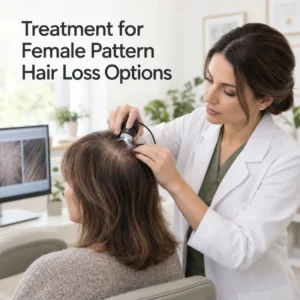

Finding more hair in the shower, on your brush or around the hairline can make any promised treatment result feel urgent. But meaningful laser therapy results are not usually immediate. Low-level laser therapy is a gradual hair-regrowth treatment designed to support follicles over repeated sessions, so the most reliable way to judge progress is through consistent treatment, photographs and professional review rather than day-to-day mirror checks.
For people with thinning hair, the goal is often not an overnight transformation. It is to reduce further shedding, improve the quality of existing hairs and create the conditions for visibly fuller density over time. That can be a valuable result, particularly when treatment starts before follicles have become permanently inactive.
What laser therapy results can realistically look like
Laser therapy for hair loss uses specific wavelengths of low-level light to stimulate cellular activity within the scalp. The treatment is non-invasive, does not involve surgery and is generally comfortable. It may help improve blood flow around the follicle and support the hair growth cycle, encouraging weak, miniaturised hairs to grow stronger and thicker.
Results vary because hair loss has more than one cause. Some clients notice less shedding first. Others see fine new hairs around the hairline or parting, followed by better coverage as those hairs mature. For many, the most noticeable change is that the hair looks denser when styled and the scalp is less visible under bright light.
Laser therapy is usually most useful for early to moderate thinning, including androgenetic hair loss in men and women. It can also be a supportive treatment for people whose scalp needs a healthier environment for growth. If an area has been bald for many years, or follicles have been replaced by scar tissue, laser treatment alone is less likely to restore substantial coverage. In those cases, a tailored medical programme or FUE hair transplantation may be more appropriate.
When should you expect to see a difference?
Hair grows slowly, so patience is part of any credible treatment plan. Some people report reduced shedding or improved scalp comfort within the first eight to twelve weeks. Visible changes in thickness and density more commonly take three to six months of regular treatment. A clearer assessment is often possible after six to twelve months, when new growth has had time to lengthen and mature.
Early shedding can occasionally occur when the hair cycle shifts. This does not automatically mean the treatment is failing, but it should be discussed with a qualified practitioner, especially if shedding is heavy or prolonged. The aim is to assess the whole pattern – hair calibre, density, scalp condition and rate of loss – not one difficult week.
Progress photographs are particularly useful. Take them monthly in the same room, with the same lighting, angle and dry-hair styling. A photograph taken under overhead bathroom lighting can make even healthy hair appear thinner, while a different haircut can create a misleading impression of improvement. Consistent images give you and your clinician a more honest basis for deciding whether the plan is working.
The factors that shape your results
Laser therapy does not work in isolation from the rest of your health or hair routine. A personalised assessment helps identify whether it is the right treatment and whether another underlying issue needs attention first.
Four factors make a particular difference:
- The cause of your hair loss. Genetic thinning may respond differently from hair loss linked to iron deficiency, thyroid changes, stress, illness, medication or scalp inflammation.
- How early you begin. Follicles that are still producing finer hairs have more potential than areas that have been smooth and hairless for years.
- Consistency. Skipping sessions or stopping as soon as hair improves can limit progress. Hair-growth treatments need a regular schedule.
- Your wider treatment plan. Prescription therapies, DHT inhibitors, specialist shampoos or topical treatments may be advised alongside laser therapy where clinically suitable.
This is why a generic device or a one-size-fits-all routine can disappoint. The right wavelength and treatment frequency matter, but so does identifying whether DHT sensitivity, scalp irritation, nutritional factors or a medical condition is contributing to thinning.
Why combination treatment often delivers better outcomes
Laser therapy can be an effective part of a programme, but it is not a replacement for every other form of hair-loss treatment. In pattern hair loss, DHT can continue to miniaturise vulnerable follicles. For suitable patients, prescription therapies or DHT inhibitors may address that underlying mechanism while laser therapy supports follicle function and hair quality.
A medically designed shampoo or scalp treatment can also have a practical role. Product build-up, excess oil, inflammation and flaking do not always cause hair loss, but they can make the scalp less comfortable and complicate a consistent routine. The right products should support the scalp without making unrealistic regrowth claims.
For people considering a transplant, laser treatment may be used as part of a longer-term plan to support existing native hair. A transplant redistributes permanent donor hairs; it does not stop future thinning in the surrounding area. Protecting the hair you still have matters just as much as restoring the areas already lost.
How to know whether laser therapy is right for you
A good consultation should start with questions, not a sales pitch. Your practitioner should ask when the thinning began, whether it is diffuse or concentrated around the temples, crown or parting, and whether there has been recent illness, stress, childbirth, weight change or medication changes. They should also review your scalp, medical history and any treatments you are already using.
Laser therapy may be a sensible option if you have active follicles, gradual thinning and are willing to follow a consistent programme for several months. It may not be the first step if hair loss is sudden, patchy, painful, accompanied by scaling, or linked to a new health symptom. Those signs deserve prompt medical assessment before adding a cosmetic or clinical hair treatment.
At Hair Formulas, treatment recommendations are informed by our trichologists and dermatologists, with the aim of matching the treatment to the person rather than selling the same answer to everyone. A remote assessment with clear photographs and medical details can help establish whether laser therapy, prescription support, scalp care or a different route is the better investment.