
A widening parting, more hair in the shower, or a receding hairline can make every mirror feel like a warning. The right non-surgical hair loss treatment is not a single product or a quick fix. It is a targeted plan built around why your hair is thinning, how long it has been happening, your scalp condition and your medical history.
Many people spend months switching shampoos, supplements and expensive cosmetic products without addressing the cause. Hair loss can be influenced by genetics, hormonal changes, stress, illness, nutritional deficiencies, medication and inflammatory scalp conditions. A clinically informed assessment helps separate temporary shedding from progressive hair loss and gives you a realistic route towards thicker, fuller-looking hair.
Why the Cause of Hair Loss Matters
Not all hair thinning follows the same pattern. Male and female pattern hair loss is commonly linked to sensitivity to dihydrotestosterone, often called DHT. Over time, susceptible follicles become smaller, producing finer, shorter hairs before eventually becoming inactive.
Diffuse shedding can look different. You may notice reduced density all over the scalp after illness, rapid weight loss, emotional stress, childbirth or a change in medication. This can be temporary, but persistent shedding deserves professional attention. Scalp itching, flaking, soreness or excess oil can also affect the environment in which hair grows and should not be ignored.
This is why buying a treatment solely because it worked for somebody else can be disappointing. A DHT-focused programme may be appropriate for genetic thinning, while a person with a scalp disorder, iron deficiency or sudden shedding may need a different approach. The goal is to protect the follicles you still have while encouraging the strongest possible regrowth where follicles remain viable.
Non-Surgical Hair Loss Treatment That Fits Your Stage
The best results usually come from starting early and remaining consistent. Non-surgical treatments cannot recreate follicles that have been lost for many years, but they can often slow further thinning, improve hair calibre and increase visible density. Your treatment plan may combine home care with medically supervised therapies.
Prescription therapies and DHT inhibitors
For suitable patients, prescription treatments can be among the most effective options for pattern hair loss. DHT inhibitors reduce the hormonal process that can shrink genetically susceptible follicles. Other prescription therapies may stimulate growth activity and prolong the hair growth phase.
These treatments are not appropriate for everyone. Your age, sex, health history, current medication, family-planning considerations and pattern of loss all matter. Potential side effects and expected timelines should be discussed clearly before treatment begins. A reputable provider will never treat a prescription option as a casual add-on.
Medically designed topical treatments
Topical regrowth treatments are applied directly to the scalp and can be useful alone or alongside prescription therapy. They are designed to support follicle activity, improve the growth cycle and help maintain existing density. Results depend heavily on regular application. Stopping too soon is one of the main reasons people assume a treatment has failed.
Temporary shedding can occur when a growth treatment first changes the hair cycle. While this can be unsettling, it does not automatically mean the treatment is harming your hair. Assessment and ongoing support help distinguish an expected adjustment from irritation or a reason to change the plan.
Laser hair-regrowth therapy
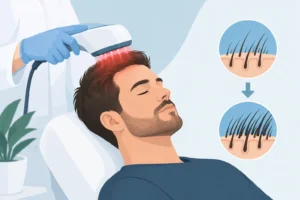
Low-level laser therapy uses specific light wavelengths to support cellular activity around the hair follicle. It is a non-invasive option for men and women with early to moderate thinning, particularly when paired with an appropriate topical or prescription programme.
Laser therapy requires commitment. It is not a one-off procedure, and results develop gradually over several months. It may be a valuable option for people who want to strengthen a broader plan without surgery, but it cannot overcome advanced bald areas where follicles are no longer active.
Scalp health and specialist haircare
Healthy hair growth begins with the scalp. Medically designed shampoos, cleansing treatments and topical scalp products can help manage flaking, inflammation, excess sebum and product build-up. They also create a better foundation for active hair-loss treatments.
A shampoo alone is unlikely to reverse hereditary hair loss. That does not make scalp care irrelevant. It simply means expectations should be accurate. The right shampoo can support comfort, hair quality and treatment adherence, while a separate medical therapy targets the underlying pattern of loss.
What Results Can You Expect?
Hair grows slowly, so meaningful change is measured in months rather than days. In the first three months, the aim is often reduced shedding and improved scalp condition. Between three and six months, some people notice stronger hair quality, less breakage and early improvement in density. More visible change may take six to twelve months, depending on the treatment and the stage of hair loss.
Progress photographs taken in the same lighting and at the same angle are more useful than checking your hairline every morning. They show whether density is holding, whether finer hairs are becoming stronger and whether a programme needs adjusting.
Results vary. Someone with recent thinning and active follicles is more likely to see regrowth than someone with long-standing, smooth areas of baldness. Age is only one factor. The duration, cause and severity of hair loss, plus consistency with treatment, are usually more important.
Avoid the Costly Trial-and-Error Cycle
Hair-loss marketing often relies on dramatic promises, vague ingredient lists and before-and-after images that do not explain the treatment behind them. Be cautious of products claiming to cure every type of hair loss, regrow hair in a few weeks or replace a proper assessment.
A useful treatment provider should ask about your medical history, medication, timing of hair loss and scalp symptoms. Clear photographs can help assess your pattern remotely, although sudden, patchy or painful hair loss may require an in-person medical review. Conditions such as alopecia areata, scarring alopecia and fungal scalp infections need prompt diagnosis rather than a generic regrowth product.
At Hair Formulas, treatment recommendations are shaped by clinical input from pharmacists, trichologists and dermatologists, with more than 20 years of experience in hair and scalp health. This allows your programme to evolve as your hair responds, rather than leaving you with another bottle that does not match your needs.
When Non-Surgical Options May Not Be Enough
Non-surgical treatment is often the right first step, even for people considering a transplant. It can help stabilise ongoing loss and strengthen surrounding hair, which matters when planning any future restoration work. However, it has limits.
If an area has been bare for a long time, the follicles may no longer be capable of producing meaningful growth. In that situation, FUE hair transplantation may offer a more suitable route for restoring a hairline or filling established areas. A consultation can determine whether medical treatment, laser therapy, transplantation or a combination is the most sensible investment.
Do not wait for thinning to become impossible to disguise before seeking advice. A proper assessment can replace guesswork with a treatment plan that protects the hair you have and gives every viable follicle the best chance to perform.