
A widening parting, more scalp showing under bright light, and a ponytail that feels thinner than it used to are often the first signs. Treatment for female pattern hair loss works best when it begins with a clear diagnosis, rather than another expensive shampoo promising instant volume. The aim is to slow further thinning, support regrowth where follicles remain active, and build a plan you can realistically maintain.
Female pattern hair loss is common, but it is not something you have to simply accept. With the right combination of medical assessment, clinically selected treatments and consistent follow-up, many women can achieve thicker-looking, healthier hair and improved coverage.
What female pattern hair loss looks like
Female pattern hair loss, also known as female androgenetic alopecia, usually develops gradually. Rather than a receding hairline or obvious bald patches, women commonly notice diffuse thinning across the top of the scalp, especially around the central parting and crown. The frontal hairline is often retained, although density behind it may reduce.
The process is linked to follicle sensitivity, genetics and hormonal influences. Each affected follicle spends less time producing a strong, long hair shaft. Over time, hairs become finer, shorter and less visible, creating the appearance of reduced density.
However, not every case of shedding is female pattern hair loss. Sudden or heavy shedding can follow illness, stress, rapid weight loss, childbirth, restrictive dieting, thyroid changes or low iron stores. Scalp inflammation and certain medicines may also contribute. This distinction matters because the most effective treatment depends on the cause.
Treatment for female pattern hair loss starts with assessment
A good treatment plan should not be based on a photograph alone or a one-size-fits-all product bundle. Your medical history, family history, current medicines, pattern of loss, scalp condition and goals all shape the safest route forward.
A consultation may identify reasons to speak with your GP or arrange further investigation, particularly when hair loss is sudden, patchy, accompanied by itching or scaling, or linked with changes in periods, acne, excess facial hair, fatigue or weight. These signs do not always indicate a serious issue, but they deserve proper attention.
For established female pattern thinning, results also depend on how long follicles have been miniaturising. Treatment can often strengthen weakened hairs and preserve existing density, but it cannot reliably revive follicles that are no longer producing hair. Starting early gives you more options.
Proven options for female pattern thinning
Topical minoxidil
Topical minoxidil is one of the best-established non-surgical options for female pattern hair loss. Applied directly to the scalp, it helps extend the growth phase of the hair cycle and can encourage miniaturised follicles to produce stronger hairs.
It requires consistency. Some people notice an initial increase in shedding during the first few weeks as hairs move through their cycle. This can be unsettling, but it is not automatically a sign that the treatment is failing. Visible improvement usually takes several months, and continued use is needed to maintain results.
The formulation, strength and frequency should suit your scalp and routine. Irritation, dryness or unwanted facial hair can occur in some users, so professional advice is valuable when selecting and using a topical treatment.
Prescription therapies and DHT inhibitors
For women with progressive or more established thinning, prescription therapies may be considered after a medical assessment. These can include medicines that reduce the effect of androgens on susceptible hair follicles. DHT inhibitors and anti-androgen approaches are not suitable for everyone, and the appropriate choice depends on age, medical history, other medication and pregnancy potential.
Some options are used off-label for female hair loss, meaning a prescriber must carefully weigh the evidence, expected benefit and potential risks. Women who are pregnant, trying to conceive or breastfeeding need particular caution, as certain medicines must be avoided. Side effects, blood pressure considerations and required monitoring should be discussed clearly before treatment begins.
A medically supervised plan is very different from buying unregulated tablets online. The goal is not to take the strongest medication available. It is to use an appropriate treatment with a sensible monitoring plan and a realistic view of results.
Laser hair regrowth treatment
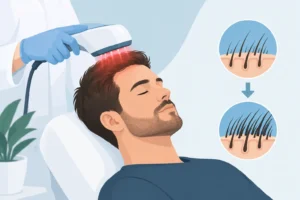
Low-level laser therapy can be a useful addition for suitable candidates. This non-invasive treatment uses specific light wavelengths to support follicle activity and scalp circulation. It is often chosen by women who want to complement topical or prescription treatment without adding another daily scalp product.
Laser treatment is not an overnight solution. A regular course is required, and results vary with the severity and cause of thinning. It tends to be most useful when follicles are still present but producing finer hair. Combining laser therapy with a targeted medical programme can provide a stronger pathway than relying on any one treatment alone.
Scalp care and supportive products
A healthy scalp provides a better environment for growing hair, but cosmetic haircare alone will not reverse genetic follicle miniaturisation. That said, medically designed shampoos, scalp treatments and strengthening products can help manage oiliness, flaking, irritation and breakage that make thinning hair look worse.
Choose products for your scalp condition, not just packaging claims. Harsh cleansing, frequent heat styling, tight hairstyles and aggressive brushing can add breakage to an already difficult situation. Supportive care is most valuable when it sits alongside a treatment designed to address the underlying hair-loss process.
What results can you realistically expect?
The first goal is often reduced shedding and stabilisation. Regrowth comes later, usually as fine new hairs that gradually gain length and calibre. Most treatments need at least three to six months before meaningful changes can be assessed, while fuller improvement may take closer to a year.
Progress photographs taken in the same lighting, parting and angle are far more useful than checking the mirror each morning. Hair density changes slowly, and day-to-day judgement is unreliable. A professional review can help determine whether your treatment should continue, be adjusted or be combined with another option.
It also helps to set the right expectation: treatment may improve coverage and preserve the hair you have, but it may not restore the density you had as a teenager. A plan that delivers noticeable thickening, less visible scalp and better confidence is still a worthwhile result.
When might a hair transplant be considered?
FUE hair transplantation can be appropriate for selected women, but it is not the first answer to diffuse female pattern thinning. A transplant redistributes hairs from a stable donor area to areas of visible loss. It does not stop ongoing miniaturisation in untreated hair.
The donor area must be carefully assessed, as some women have diffuse thinning that also affects the donor zone. Surgical restoration is generally most successful when hair loss is stable, the cause has been properly diagnosed and a long-term medical plan is in place to protect existing hair. For the right candidate, it can improve framing and density in targeted areas. For the wrong candidate, it can create unrealistic expectations and use up valuable donor hair.
Build a plan you can keep using
The most successful programme is rarely the most complicated one. It is the plan that fits your diagnosis, budget, lifestyle and tolerance for maintenance. For some women, that means a topical treatment and scalp-support routine. For others, prescription therapy, laser treatment and ongoing clinical reviews may be the more appropriate route.
At Hair Formulas, assessments consider the full picture before recommending a route forward. This helps avoid wasted money on generic beauty products that only mask the problem while thinning continues.
If your parting is widening or your hair is losing density, request a consultation and act while your follicles still have the best chance to respond. Early, consistent treatment can make the difference between managing visible thinning and watching it progress.